One of the most prominent examples of the global shift towards carbon emissions becoming commercially relevant is the European Union’s Carbon Border Adjustment Mechanism (CBAM). Brought into effect on the 1st of January 2026, as part of the EU’s wider decarbonisation strategy, the policy is designed to target and reduce carbon leaks by equalising the carbon cost of domestically manufactured and foreign-manufactured carbon-intensive goods. CBAM ensures that the carbon emissions associated with manufacturing certain goods are accounted for when those goods are imported into the EU, regardless of the environmental standards in the exporting country. Importers must then purchase CBAM certificates that correspond to the emissions embedded in those goods. Effectively, these CBAM certificates are a tool for preventing carbon emissions ‘leaking’ elsewhere outside of the EU by placing a financial cost on the emissions embedded in the production of imported goods. Consequently, CBAM is representative of the transition from carbon emissions being a solely environmental issue to a factor that affects business.
We can observe this shift across global industries. In Thailand, for example, the emerging draft Climate Change Act introduces a carbon tax once a product is considered to have entered the Thai market and left a ‘Temporary Area.’
How Do You Measure Carbon?
Of course, as carbon acquires a commercial value, the ability to measure and reduce emissions becomes commercially valuable too. This is where markets for instruments such as renewable energy certificates and carbon credits begin to emerge.
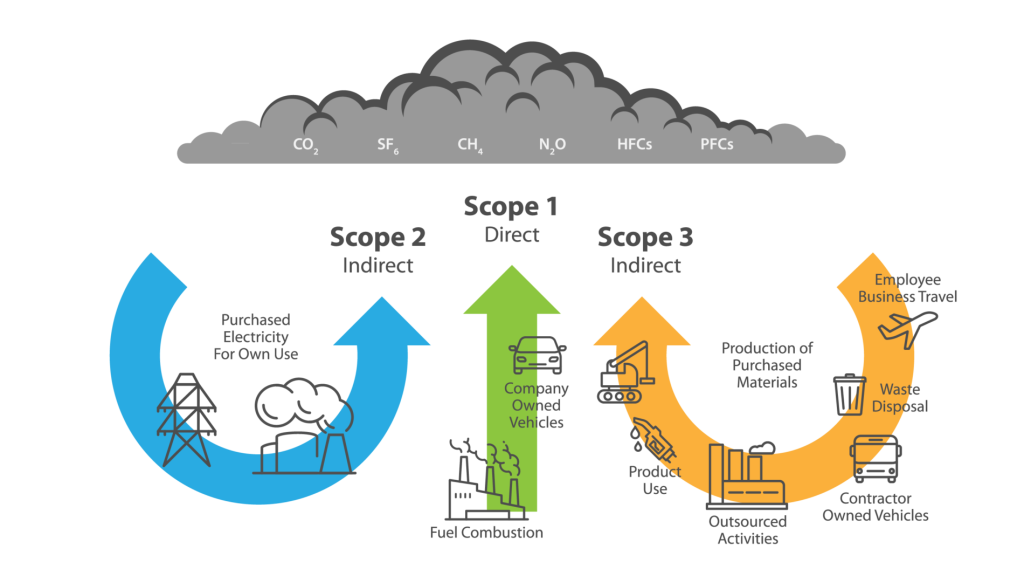
As a result, it is increasingly in businesses’ interests to track and measure their emissions, understanding where they come from and, ultimately, how they might be reduced. This requires a credible, standardised way to track the release of carbon attributable to individual companies. This is where frameworks such as the GHG Protocol become significant, as they categorise emissions into three scopes: Scope 1 (direct emissions), Scope 2 (indirect emissions from purchased or acquired energy), and Scope 3 (other indirect emissions), providing a framework for companies to measure their total carbon footprint. From this, it follows that Scope 2 would account for the indirect emissions a company creates by purchasing electricity, and so for electricity-consuming businesses, measuring the emissions that power their electric grid becomes part of the picture of their carbon footprint.
Can I-RECs Help Tackle Scope 2?
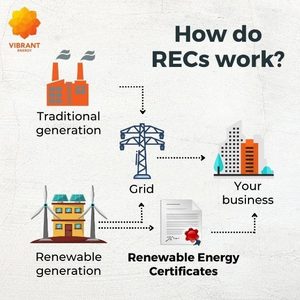
One way to answer the question: how can we address our scope 2 emissions? Is through the purchase of Renewable Energy Certificates (I-RECs). One certificate represents the renewable attributes associated with one megawatt-hour of renewable electricity generated and fed into the grid. I-RECs track renewable energy and provide a tool for companies to procure the evidence that this energy was generated; this can otherwise be described as procuring a renewable energy attribute. I-RECs therefore provide companies with a recognised means of evidencing renewable electricity attributes, which can support the case that the electricity consumption being measured through carbon accounting can be associated with lower Scope 2 emissions.
This becomes particularly significant for electricity-intensive industries such as Thailand’s rapidly expanding data-centre sector. In November 2025, Thailand’s Board of Investment approved four data-centre projects worth US$3.1 billion in total. As the growth of artificial intelligence drives demand for increasingly large amounts of electricity, the emissions associated with powering these facilities become an increasingly important commercial consideration. For a data-centre operator seeking to manage or report its Scope 2 emissions, procuring renewable electricity attributes can therefore form part of its broader sustainability strategy.
Are Carbon Credits the Answer?
There exists another route through which a company may seek to address its greenhouse gas emissions: the purchase of carbon credits. A carbon credit generally represents one tonne of CO₂e of verified emissions reduction or removal. By purchasing such credits, a company may seek to compensate for the emissions they generate through their own activity by financing the reduction or removal of equivalent emissions elsewhere. This fundamentally differs from procuring I-RECs since carbon credits generally have no direct connection to the energy supply or production process that generated the company’s emissions. Thus, carbon credits can therefore form part of an offsetting strategy rather than a direct decarbonisation of the manufacturing process.
What Makes a REC High-Quality?
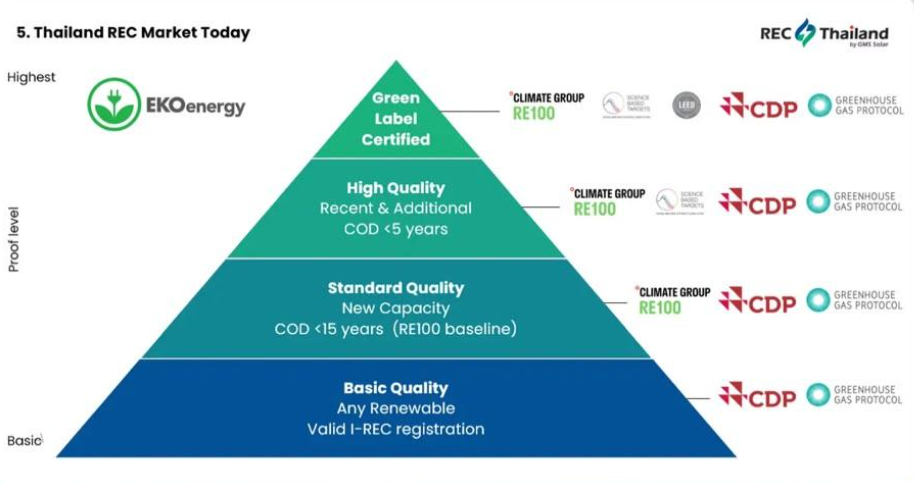
The renewable energy market is ever-evolving, and it is increasingly important for businesses to demonstrate the quality and credibility of the renewable energy attributes they are purchasing. Higher-quality RECs allow businesses to do this and can be characterised by a number of attributes which provide greater insight into the renewable electricity the certificate represents and the impact of its procurement.
Amongst these is traceability. For example, each REC carries a unique identification number and information that allows the certificate to be traced back to the renewable electricity it represents, such as the generating facility and the date of generation. Robust traceability helps prevent double counting, meaning that once a buyer has retired a REC, its renewable attribute is permanently claimed and no other party may claim or use it. The granularity of a REC determines how detailed a breakdown it can provide of renewable electricity production and consumption. The more granular the REC, the more precise this breakdown can be; for example, renewable electricity generated by a particular wind facility could be matched with a company’s electricity consumption at a specific time, such as Tuesday at 4pm. Additionality considers whether the REC you purchase contributes to supporting new renewable energy generation that otherwise would not have occurred, rather than simply accounting for existing renewable generation projects or sources. This goes beyond accounting and moves into the sphere of real-world impact, showing how RECs with these attributes can enable businesses to contribute meaningfully to their sustainability objectives.
For businesses, the message is clear: as carbon becomes increasingly commercial, the way you procure and account for renewable energy matters. It is no longer simply a question of buying renewable electricity, but of choosing renewable energy attributes that can provide the credibility needed to support sustainability goals. For businesses looking to take the next step, Thai RECs can help match their requirements with high-quality Renewable Energy Certificates across the technologies available in Thailand thereby supporting their transition towards lower-carbon operations.